
What is Retro Authorization in Medical Billing?
If you have worked in medical billing for any length of time, you have probably heard someone say, “Can we request a retro authorization?” Sometimes it saves a claim. Other times the insurance company refuses it completely. Knowing the difference can save your practice thousands of dollars.
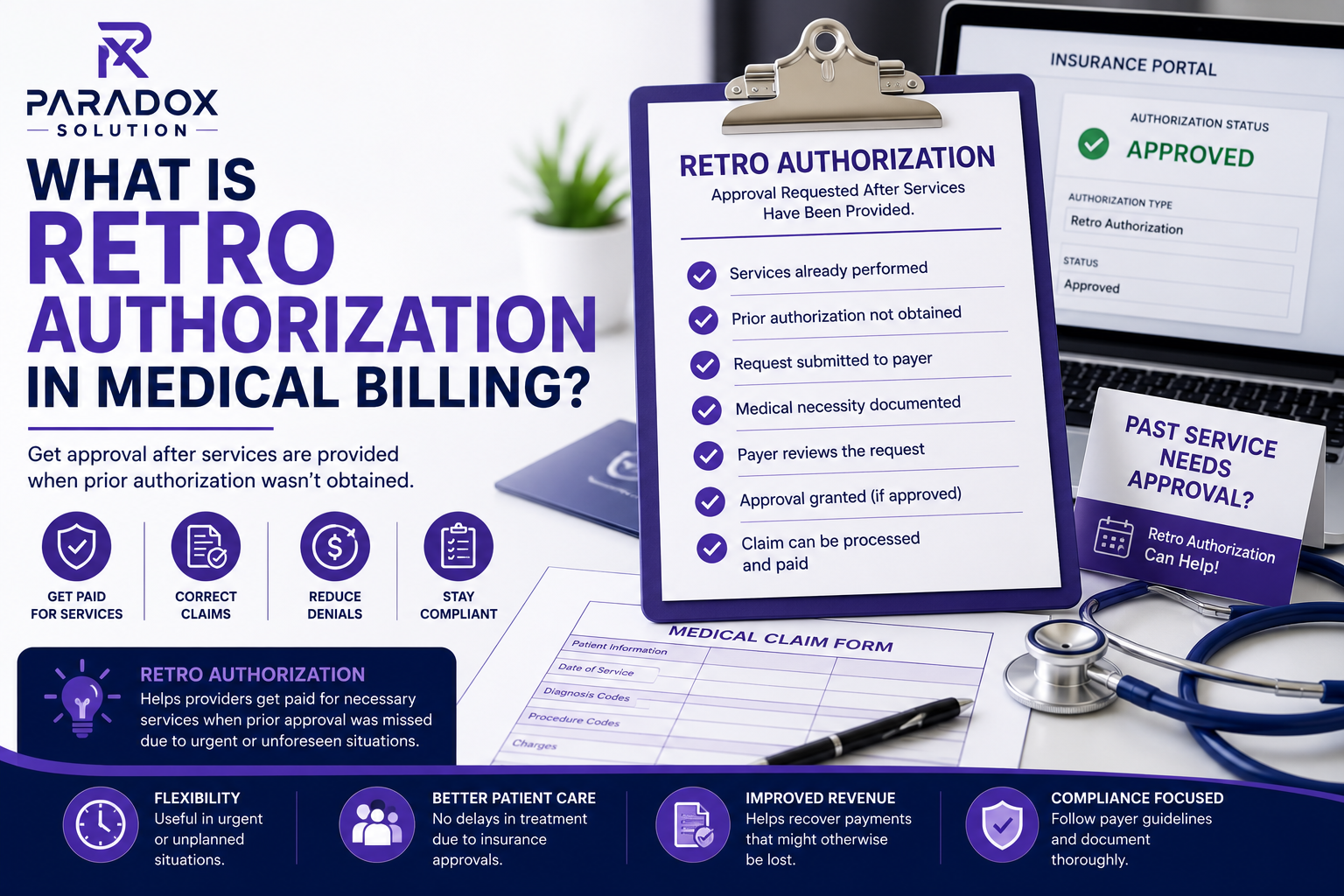
So, what is retro authorization in medical billing? Simply put, it is a request for prior authorization after a patient has already received medical services. Instead of getting approval before treatment, the provider asks the insurance company to review the case afterward and decide whether it qualifies for coverage.
Retro authorization is never something a practice should rely on. Most insurance companies expect prior authorization before scheduled services. However, emergencies, system outages, eligibility issues, or unexpected situations sometimes make retro authorization possible.
Understanding when it works, which insurance companies may allow it, and how quickly you must act can significantly improve your reimbursement rate while reducing unnecessary claim denials.
What Is Retro Authorization in Medical Billing?
Retro authorization is an insurance review that happens after medical services have already been provided.
Normally, the process looks like this:
| Standard Authorization | Retro Authorization |
|---|---|
| Authorization requested before treatment | Authorization requested after treatment |
| Services performed after approval | Services already completed |
| Lower denial risk | Higher denial risk |
| Preferred by insurance companies | Allowed only under certain situations |
Think of retro authorization as asking permission after the fact. Insurance companies only consider it when their policy allows exceptions.
Why Does Retro Authorization Happen?
No billing department plans to submit retro authorization requests. They usually happen because something unexpected occurred.
Some common situations include:
| Situation | Retro Authorization May Be Possible |
|---|---|
| Emergency admission | Yes |
| Patient unconscious | Yes |
| Weekend admission | Sometimes |
| Insurance portal outage | Sometimes |
| Eligibility discovered after treatment | Sometimes |
| Staff overlooked authorization | Depends on payer |
| Natural disaster | Often considered |
Every payer has different rules.
Real World Example
A patient arrives in the emergency room with severe chest pain.
The physician immediately admits the patient for cardiac treatment.
There is no time to request authorization before treatment because delaying care could threaten the patient’s life.
The hospital later submits clinical documentation and requests retro authorization.
Many insurance companies will review this request because it involves emergency medical care.
Now compare that with a scheduled MRI.
If the office simply forgot to obtain prior authorization before the appointment, many insurance companies will deny the retro request.
That difference matters.
When Insurance Companies Usually Consider Retro Authorization
Retro authorization is generally considered only when providers can show there was a valid reason.
Examples include:
-
- Emergency treatment
-
- Urgent hospital admission
-
- Newborn care
-
- Patient transferred from another facility
-
- Insurance system failure
-
- Incorrect eligibility information provided by payer
-
- Natural disasters
-
- State or federal emergency declarations
Routine scheduling mistakes rarely qualify.
Which Insurance Companies May Allow Retro Authorization?
Every payer has its own medical policy.
The table below provides a general overview. Policies can change, so always verify current payer guidelines before submitting requests.
| Insurance Type | Retro Authorization Usually Allowed? | Notes |
|---|---|---|
| Medicare | Limited | Mostly emergencies or specific regulations |
| Medicaid | Often yes | Rules vary by state |
| Blue Cross Blue Shield | Sometimes | Depends on state plan |
| UnitedHealthcare | Limited | Emergency situations commonly reviewed |
| Aetna | Limited | Case by case review |
| Cigna | Limited | Medical necessity required |
| Humana | Sometimes | Depends on policy |
| Tricare | Limited | Specific military guidelines |
| Workers Compensation | Often depends | State regulations vary |
| Commercial PPO Plans | Depends | Employer contract controls coverage |
Never assume because one payer approved retro authorization before that another payer will do the same.
Which Insurance Companies Usually Do Not Approve Retro Authorization?
Some plans rarely approve retro requests unless the situation clearly qualifies under their policy.
Examples often include:
| Situation | Approval Chance |
|---|---|
| Elective surgery without authorization | Very low |
| Scheduled CT scan | Low |
| Scheduled MRI | Low |
| Routine outpatient procedure | Low |
| Office forgot authorization | Often denied |
| Missing documentation | Frequently denied |
This is why prevention remains the best billing strategy.
Common Retro Authorization Time Limits
One of the biggest mistakes billing teams make is waiting too long.
Many insurance companies have strict filing deadlines.
Below are common industry timeframes.
| Insurance Type | Typical Retro Request Window |
|---|---|
| Emergency admissions | 24 to 72 hours |
| Some Medicaid plans | 5 to 30 days |
| Commercial plans | 24 hours to 14 days |
| Hospital admissions | Often within 72 hours |
| Newborn coverage | Usually 30 days |
| Special exceptions | Case specific |
These are only general ranges.
Always review each payer contract because deadlines vary.
Documents Usually Needed
A strong retro authorization request includes complete documentation.
Use this checklist before submitting.
| Document | Needed |
|---|---|
| Physician notes | Yes |
| Admission records | Yes |
| Clinical documentation | Yes |
| Medical necessity documentation | Yes |
| Emergency room notes | If applicable |
| Operative report | If surgery performed |
| Imaging reports | If relevant |
| Insurance information | Yes |
| Patient demographics | Yes |
Incomplete documentation is one of the leading causes of denial.
Medical Necessity Is Everything
Insurance companies approve retro authorization only when they believe the treatment was medically necessary.
Medical necessity generally answers questions like:
-
- Was treatment urgent?
-
- Could care safely wait?
-
- Did delaying treatment increase patient risk?
-
- Was the service appropriate?
-
- Was documentation complete?
If these answers are clear, approval becomes more likely.
Common Reasons Retro Authorization Gets Denied
Many denials are preventable.
| Denial Reason | Can It Be Prevented? |
|---|---|
| Prior authorization not requested | Often yes |
| Late submission | Yes |
| Missing records | Yes |
| No medical necessity | Sometimes |
| Wrong CPT code | Yes |
| Incorrect diagnosis code | Yes |
| Insurance policy excludes service | No |
| Authorization not required but submitted incorrectly | Yes |
Training billing staff can reduce many of these problems.
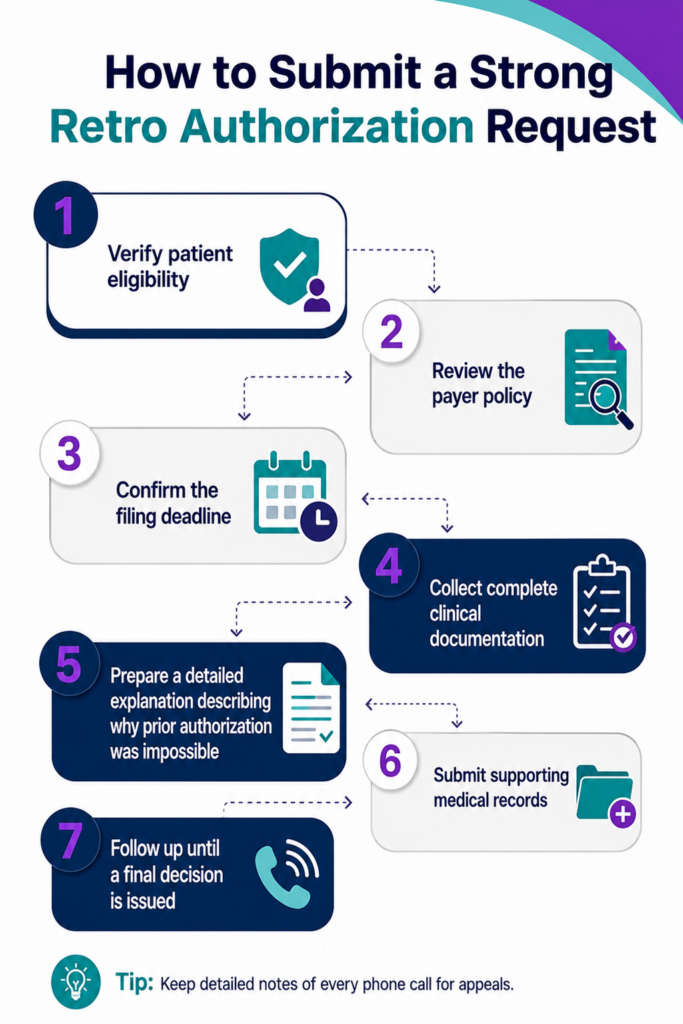
How to Submit a Strong Retro Authorization Request
Tips That Help Billing Teams Get Better Results
Experienced billing specialists often follow a few practical habits.
| Best Practice | Why It Helps |
|---|---|
| Verify benefits before visits | Prevents surprises |
| Check authorization requirements daily | Rules change often |
| Train front office staff | Reduces missed authorizations |
| Monitor payer updates | Policies are updated regularly |
| Submit requests immediately | Improves approval chances |
| Keep documentation organized | Speeds payer review |
| Appeal when appropriate | Some denials are overturned |
These habits often save far more money than dealing with denied claims later.
Cost of Missing Authorization
Even one missed authorization can become expensive.
| Service | Possible Financial Impact |
|---|---|
| MRI | Several hundred dollars |
| CT Scan | Hundreds to over one thousand dollars |
| Surgery | Thousands of dollars |
| Hospital admission | Tens of thousands of dollars |
| Specialty medication | Very high cost |
For many practices, preventing one denial each week can make a noticeable difference in monthly revenue.
Retro Authorization vs Prior Authorization
| Prior Authorization | Retro Authorization |
|---|---|
| Requested before care | Requested after care |
| Preferred process | Exception process |
| Lower denial rate | Higher denial rate |
| Predictable reimbursement | Approval uncertain |
| Standard workflow | Emergency or unusual circumstances |
Whenever possible, prior authorization should always be your first choice.
Final Thoughts
Understanding what is retro authorization in medical billing helps practices respond quickly when unexpected situations occur. While retro authorization can sometimes rescue a claim, it should never replace a strong prior authorization process.
Every insurance company follows its own policies, deadlines, and documentation requirements. Emergency services, urgent admissions, and situations beyond the provider control have a better chance of approval than routine scheduled procedures where authorization was simply overlooked.
The most successful billing teams focus on prevention first. They verify insurance, confirm authorization requirements before treatment, document medical necessity carefully, and submit any retro requests as soon as possible. These simple habits reduce denials, improve cash flow, and create a smoother experience for both providers and patients.