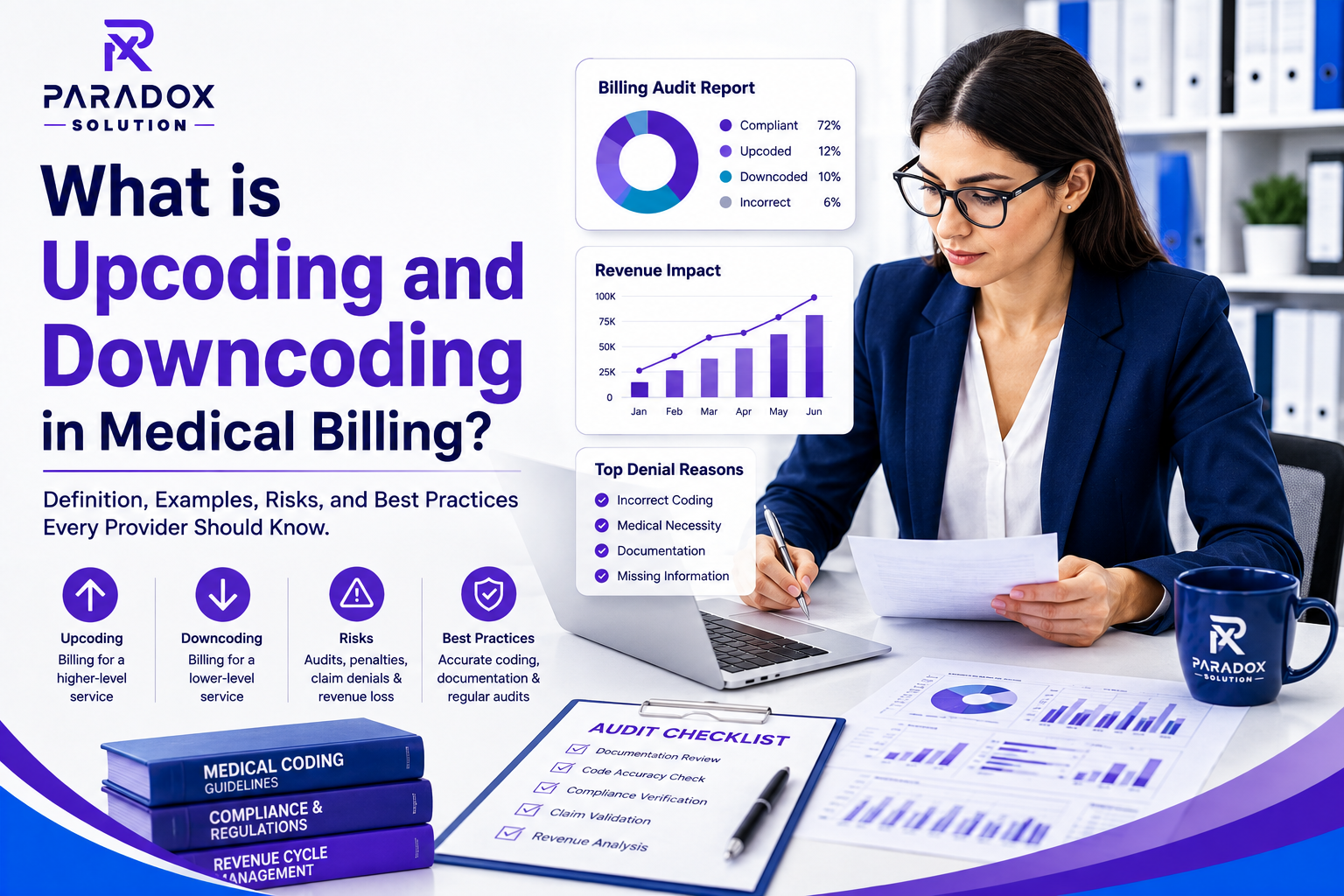
What Is Upcoding and Downcoding in Medical Billing?
Medical billing and coding are essential components of the healthcare revenue cycle. Accurate coding ensures healthcare providers receive appropriate reimbursement while maintaining compliance with insurance regulations. However, coding errors or intentional coding practices such as upcoding and downcoding can significantly impact revenue, compliance, and patient trust.
In this article, we’ll explore what upcoding and downcoding are, their causes, consequences, and best practices to prevent them.
Understanding Medical Coding
Medical coding is the process of translating healthcare services, diagnoses, and procedures into standardized codes such as:
-
- ICD-10 Codes (Diagnosis Codes)
-
- CPT Codes (Current Procedural Terminology)
-
- HCPCS Codes (Healthcare Common Procedure Coding System)
Insurance companies use these codes to determine reimbursement for medical services. Accurate coding is crucial for proper payment and regulatory compliance.
What Is Upcoding in Medical Billing?
Upcoding occurs when a healthcare provider or medical coder assigns a billing code that represents a more complex, expensive, or higher-level service than what was actually performed.
Example of Upcoding
A physician performs a routine follow-up office visit but bills it as a comprehensive evaluation and management (E/M) visit. Since comprehensive visits reimburse at a higher rate, the claim generates more revenue than deserved.
Common Causes of Upcoding
-
- Lack of coding knowledge or training
-
- Misinterpretation of documentation
-
- Intentional attempts to increase reimbursement
-
- Pressure to meet revenue goals
-
- Inadequate compliance oversight
Consequences of Upcoding
Upcoding is considered a serious compliance issue and may result in:
-
- Insurance audits
-
- Repayment demands
-
- Financial penalties
-
- False Claims Act violations
-
- Damage to provider reputation
In severe cases, intentional upcoding may lead to legal action and criminal charges.
What Is Downcoding in Medical Billing?
Downcoding occurs when a claim is submitted using a lower-level code than the service actually provided. This may happen intentionally or unintentionally.
Example of Downcoding
A physician performs a high-complexity office visit that qualifies for a Level 5 E/M code, but the claim is submitted as a Level 3 visit, resulting in lower reimbursement.
Common Causes of Downcoding
-
- Fear of audits or compliance investigations
-
- Insufficient documentation
-
- Lack of confidence in coding accuracy
-
- Payer adjustments and reimbursement policies
-
- Coding staff errors
Consequences of Downcoding
Although downcoding may seem less risky than upcoding, it can negatively impact healthcare organizations by:
-
- Reducing revenue
-
- Underrepresenting provider workload
-
- Creating inaccurate patient records
-
- Affecting productivity metrics
-
- Limiting future reimbursement opportunities
Consistent downcoding can lead to substantial financial losses over time.
Upcoding vs. Downcoding: Key Differences
| Feature | Upcoding | Downcoding |
|---|---|---|
| Definition | Billing a higher-level service than performed | Billing a lower-level service than performed |
| Financial Impact | Increases reimbursement | Decreases reimbursement |
| Compliance Risk | High | Moderate |
| Audit Risk | Significant | Possible |
| Common Cause | Revenue maximization | Fear of audits or coding uncertainty |
| Result | Overpayment | Underpayment |
How Upcoding and Downcoding Affect Revenue Cycle Management
Both practices can disrupt the healthcare revenue cycle:
Impact of Upcoding
-
- Increased audit exposure
-
- Compliance violations
-
- Claim retractions
-
- Financial penalties
Impact of Downcoding
-
- Lost revenue opportunities
-
- Reduced profitability
-
- Inaccurate performance reporting
-
- Lower reimbursement rates
Healthcare organizations must strike a balance by ensuring coding reflects the services actually documented and provided.
How to Prevent Upcoding and Downcoding
1. Conduct Regular Coding Audits
Internal and external audits help identify coding inconsistencies before they become compliance issues.
2. Improve Clinical Documentation
Accurate documentation supports appropriate code selection and reimbursement.
3. Train Coding and Billing Staff
Ongoing education ensures coders stay updated on coding guidelines, payer requirements, and regulatory changes.
4. Implement Compliance Programs
A robust compliance program helps monitor coding accuracy and reduce risk.
5. Utilize Coding Technology
Computer-assisted coding (CAC) tools and billing software can improve coding accuracy and reduce human error.
6. Monitor Key Performance Indicators (KPIs)
Track metrics such as:
-
- Coding accuracy rate
-
- Denial rate
-
- Audit findings
-
- Revenue leakage
-
- Reimbursement trends
The Role of Medical Billing Audits
Medical billing audits play a critical role in identifying:
-
- Upcoding risks
-
- Downcoding patterns
-
- Documentation deficiencies
-
- Compliance gaps
-
- Revenue cycle inefficiencies
Regular audits help healthcare organizations maintain compliance while optimizing reimbursement.
Conclusion
Understanding upcoding and downcoding in medical billing is essential for healthcare providers, billing companies, and revenue cycle management teams. While upcoding can lead to audits, penalties, and legal consequences, downcoding can cause significant revenue loss and inaccurate reporting.
The key to avoiding both issues is accurate documentation, continuous staff training, compliance monitoring, and routine medical billing audits. By implementing best practices, healthcare organizations can maximize reimbursement, reduce compliance risks, and improve overall revenue cycle performance.
Frequently Asked Questions (FAQs)
Yes. Intentional upcoding is considered healthcare fraud and can result in penalties, audits, and legal action.
Downcoding is not typically considered fraud, but it can lead to lost revenue and inaccurate billing records.
Providers can avoid coding errors through proper documentation, coder education, compliance reviews, and regular billing audits.
Coding audits help identify compliance issues, improve coding accuracy, reduce claim denials, and protect healthcare organizations from financial risk.