HMO vs PPO vs EPO vs POS Plans: Which Health Insurance Plan Is Best in 2026?
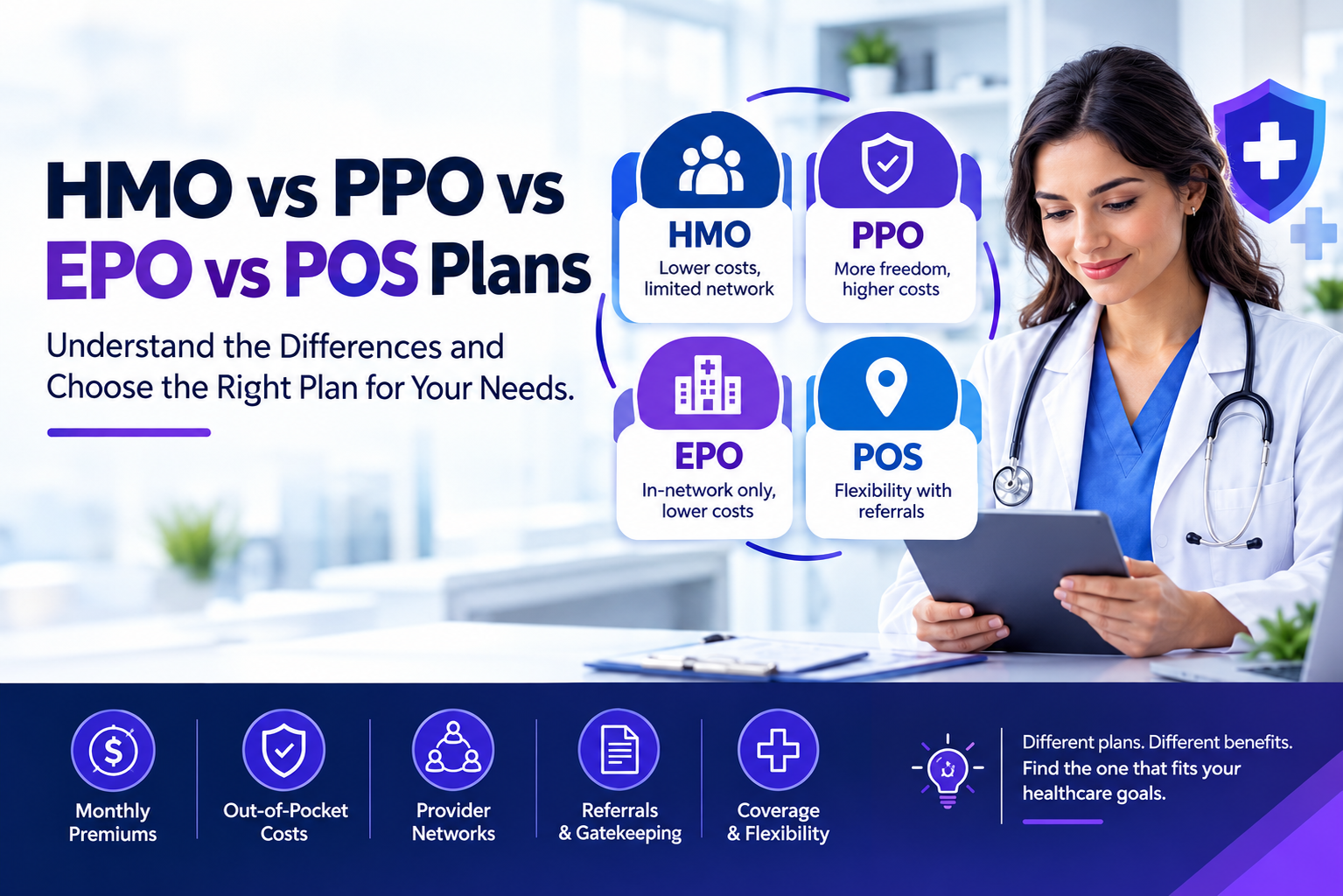
Choosing the right health insurance plan can be confusing because every plan has different rules related to provider networks, referrals, costs, and coverage options. Understanding the difference between HMO vs PPO vs EPO vs POS Plans helps patients make better healthcare decisions and allows medical practices to improve billing accuracy.
From a healthcare provider and medical billing perspective, insurance plan knowledge is critical. Many claim denials happen because of simple mistakes such as missing referrals, incorrect network verification, or failure to obtain prior authorization before providing services.
A strong insurance verification workflow helps healthcare organizations reduce denied claims, improve reimbursement, and provide patients with a better understanding of their financial responsibility.
This guide explains how HMO, PPO, EPO, and POS plans work, their differences, and how each plan impacts medical billing and revenue cycle management.
What Are HMO, PPO, EPO, and POS Health Insurance Plans?
Health insurance companies create different managed care plans to balance healthcare costs and patient access. The major differences between these plans include:
-
- Provider network flexibility
-
- Primary Care Physician (PCP) requirements
-
- Referral rules
-
- Out-of-network coverage
-
- Monthly premiums
-
- Patient responsibility
Understanding these differences helps both patients and healthcare providers avoid unexpected costs and claim issues.
| Feature | HMO | PPO | EPO | POS |
|---|---|---|---|---|
| PCP Required | Yes | No | Usually No | Yes |
| Specialist Referral | Yes | Usually No | No | Usually Yes |
| Out-of-Network Coverage | Limited | Yes | Limited | Yes |
| Monthly Premium | Low | High | Moderate | Moderate |
| Provider Choice | Limited | Highest | Moderate | Good |
What Is an HMO Plan?
A Health Maintenance Organization (HMO) is a managed care plan that focuses on controlling healthcare costs through a specific provider network.
Most HMO members select a Primary Care Physician (PCP) who manages their overall healthcare. The PCP usually provides referrals before the patient can visit specialists.
For example, a patient with an HMO plan who needs to see a cardiologist may first need an appointment with their PCP. Without an approved referral, the specialist claim may be denied.
How HMO Plans Work
An HMO member typically:
-
- Selects a PCP
-
- Receives care from network providers
-
- Gets referrals for specialist services
-
- Pays lower monthly premiums
The main advantage of an HMO plan is affordability. However, the tradeoff is less flexibility when choosing healthcare providers.
Medical Billing Considerations for HMO Plans
HMO plans often create billing challenges when verification steps are skipped.
Common HMO claim denial reasons include:
-
- Missing referrals
-
- Out-of-network provider visits
-
- Incorrect eligibility information
-
- Missing prior authorization
-
- Incorrect PCP assignment
For medical practices, insurance verification should confirm:
-
- Active coverage
-
- PCP information
-
- Referral requirements
-
- Network participation
-
- Authorization requirements
A few minutes spent verifying benefits before an appointment can prevent weeks of payment delays.
What Is a PPO Plan?
A Preferred Provider Organization (PPO) provides greater flexibility compared with an HMO plan.
Patients can usually visit specialists without referrals and may receive care from both in-network and out-of-network providers. However, out-of-network services generally come with higher deductibles and coinsurance.
Many employers choose PPO plans because employees value the freedom to select healthcare providers.
How PPO Plans Work
PPO members can:
-
- Visit specialists without PCP referrals
-
- Choose providers inside or outside the network
-
- Receive broader healthcare access
-
- Pay lower costs when using in-network providers
Although PPO plans offer more flexibility, they usually have higher premiums.
Medical Billing Considerations for PPO Plans
One common billing mistake is assuming PPO plans never require authorization.
Many PPO plans still require prior authorization for services such as:
-
- MRI and CT scans
-
- Surgical procedures
-
- Specialty medications
-
- Advanced diagnostic testing
Billing teams should always verify payer-specific requirements before services are performed.
A clean claim depends on accurate eligibility verification, correct coding, proper documentation, and confirmation of payer rules.
What Is an EPO Plan?
An Exclusive Provider Organization (EPO) plan combines some features of both HMO and PPO plans. It usually provides more flexibility than an HMO but fewer provider choices compared with a PPO.
With an EPO plan, patients generally do not need referrals to visit specialists. However, they must receive care from providers within the insurance network. Out-of-network services are typically not covered except for emergency situations.
EPO plans are popular because they often provide lower premiums than PPO plans while still allowing patients to directly access specialists.
How an EPO Plan Works
EPO members typically:
-
- Use only in-network healthcare providers
-
- Do not require specialist referrals
-
- Pay lower costs when using contracted providers
-
- Receive limited or no out-of-network coverage
For patients, the biggest advantage is easier access to specialists. For healthcare providers, the biggest challenge is confirming exact network participation.
Medical Billing Considerations for EPO Plans
EPO claims are commonly denied because practices assume that accepting an insurance company’s PPO network means they automatically participate in its EPO network.
Billing teams should verify:
-
- Patient eligibility
-
- Exact plan type
-
- Provider network participation
-
- Covered benefits
-
- Prior authorization requirements
Real-World Billing Example
A physician participates with ABC Insurance PPO plans. A patient with an ABC Insurance EPO plan schedules an appointment.
The office assumes the provider is covered because they accept ABC Insurance. However, the provider is not contracted with the patient’s specific EPO network.
The claim is denied, and the patient becomes responsible for the balance.
Lesson: Always verify participation for the exact insurance plan, not only the insurance company name.
What Is a POS Plan?
A Point of Service (POS) plan combines features of HMO and PPO insurance plans.
Like an HMO, POS plans usually require patients to select a Primary Care Physician (PCP) and obtain referrals for specialist care. However, like a PPO, POS plans may allow patients to receive care from out-of-network providers at a higher cost.
POS plans are often suitable for patients who want lower premiums but still need occasional flexibility.
How a POS Plan Works
A POS member usually:
-
- Selects a PCP
-
- Receives referrals for specialist visits
-
- Uses in-network providers for lower costs
-
- Can choose out-of-network providers with higher expenses
Medical Billing Considerations for POS Plans
Healthcare practices should verify:
-
- PCP assignment
-
- Referral approval
-
- Network status
-
- Out-of-network benefits
-
- Authorization requirements
Failing to confirm these details can result in claim denials or unexpected patient bills.
Real-World Example
A pediatric practice refers a child to an allergy specialist.
The family chooses an out-of-network specialist because of availability.
The insurance company processes the claim but applies higher coinsurance and deductible amounts.
Lesson: Patients should understand financial responsibility before selecting out-of-network care.
HMO vs PPO vs EPO vs POS Plans: Complete Comparison

| Feature | HMO | PPO | EPO | POS |
|---|---|---|---|---|
| PCP Required | Yes | No | Usually No | Yes |
| Specialist Referral | Yes | No | No | Usually Yes |
| Network Restrictions | High | Low | High | Moderate |
| Out-of-Network Coverage | Limited | Available | Limited | Available |
| Premium Cost | Lowest | Highest | Moderate | Moderate |
| Provider Choice | Limited | Excellent | Moderate | Good |
| Best For | Cost savings | Maximum flexibility | Balance of cost and access | Flexible care options |
Which Health Insurance Plan Is Best?
There is no single health insurance plan that works best for everyone. The right choice depends on healthcare needs, budget, and provider preferences.
| Healthcare Need | Recommended Plan |
|---|---|
| Lowest monthly premium | HMO |
| Frequent specialist visits | PPO |
| Lower cost without referrals | EPO |
| Occasional out-of-network care | POS |
| Maximum provider freedom | PPO |
| Established relationship with PCP | HMO or POS |
Patients with chronic conditions who regularly visit specialists may prefer PPO plans because of flexibility. Individuals focused on reducing monthly costs may prefer HMO or EPO options.
Why Insurance Plan Knowledge Matters for Medical Billing
For healthcare providers, understanding insurance plan differences directly affects revenue cycle performance.
Incorrect assumptions about plan requirements can lead to:
-
- Claim denials
-
- Delayed payments
-
- Increased accounts receivable
-
- Patient complaints
-
- Additional administrative work
A successful billing workflow should include:
Insurance Verification Checklist
Before every appointment, staff should verify:
 Active insurance coverage Correct member information Plan type Provider network status Referral requirements Prior authorization requirements Patient deductible and coinsurance Financial responsibility
Best Practices for Healthcare Practices
Healthcare organizations can improve reimbursement by following a consistent insurance verification process.
Front Desk Team
-
- Verify benefits before appointments
-
- Confirm insurance information
-
- Check referral requirements
-
- Update patient records
Clinical Team
-
- Document medical necessity
-
- Maintain complete patient records
-
- Support accurate coding
Billing Team
-
- Review payer requirements
-
- Submit clean claims
-
- Monitor denials
-
- Follow up on unpaid claims
Strong coordination between scheduling, clinical, and billing teams improves claim accuracy and reduces revenue cycle problems.
Common Mistakes That Cause Insurance Claim Denials
Healthcare practices should avoid these common mistakes:
| Mistake | Result |
|---|---|
| Assuming all plans have identical rules | Claim denial |
| Skipping eligibility verification | Payment delays |
| Missing referrals | Specialist claim rejection |
| Ignoring prior authorization | Service denial |
| Not checking network status | Patient balance issues |
Insurance companies frequently update policies, so practices should regularly review payer guidelines.