
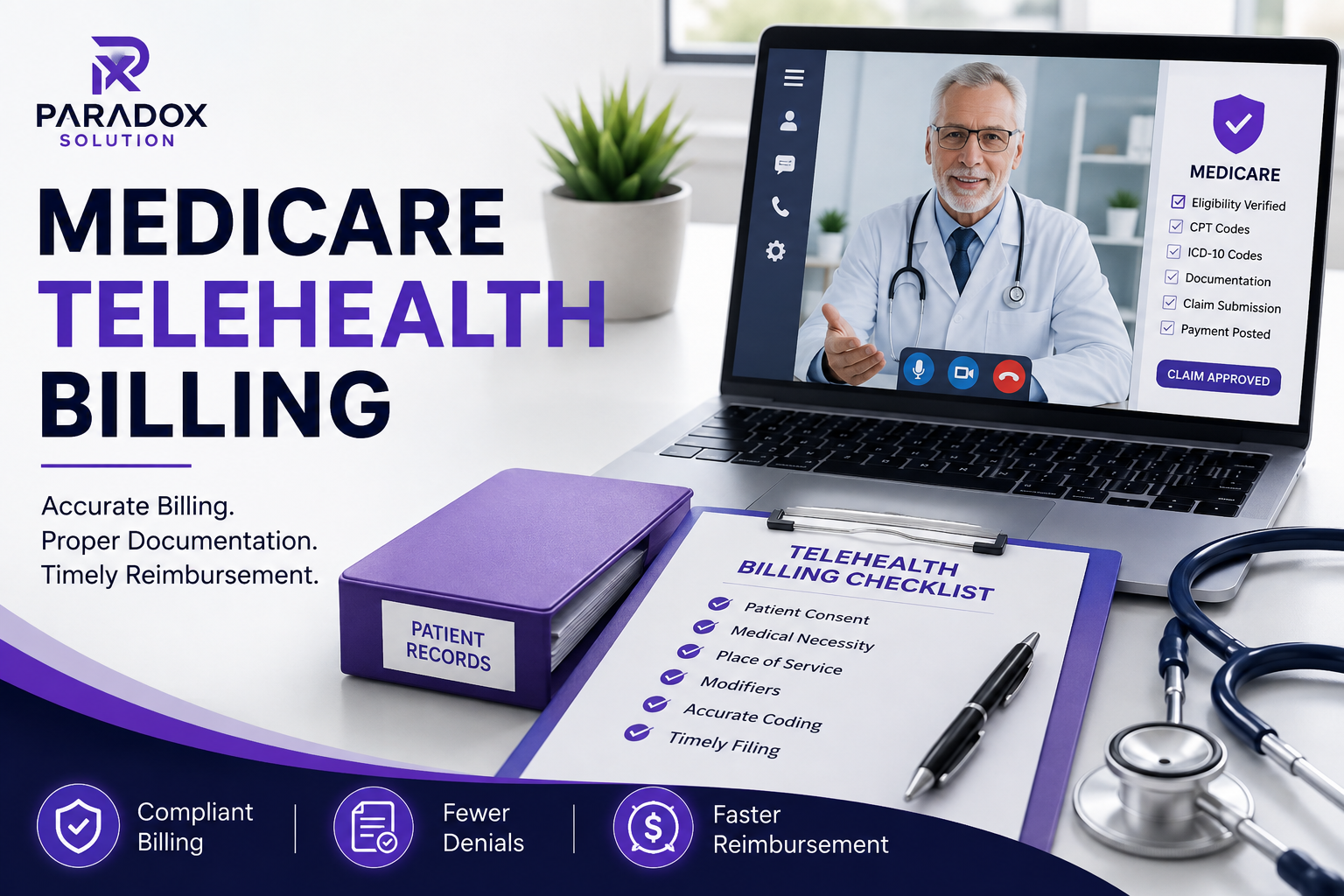
Medicare Telehealth Billing
Medicare Telehealth Billing has become an important part of healthcare reimbursement as more providers deliver care remotely. Whether you run a solo physician office, a family medicine clinic, or a large multi provider practice, knowing how Medicare pays for telehealth services helps you avoid claim denials and payment delays.
Medicare has specific rules for documentation, coding, modifiers, and claim submission, and these requirements can change over time. That is why every healthcare practice should regularly review the latest CMS guidance and payer updates. In this guide, you will learn how Medicare Telehealth Billing works, what documentation is required, which codes and modifiers are commonly used, and how to prevent costly billing mistakes. You will also find practical examples, compliance tips, and workflow recommendations that can help improve reimbursement while maintaining accurate and compliant billing practices.
What Is Medicare Telehealth Billing?
Medicare Telehealth Billing is the process of submitting claims for healthcare services provided through secure audio or video communication instead of an in person visit.
Healthcare providers must accurately report:
-
- CPT codes
-
- ICD 10 diagnosis codes
-
- HCPCS codes when applicable
-
- Place of Service codes
-
- Required modifiers
-
- Complete clinical documentation
Proper billing ensures providers receive payment while remaining compliant with Medicare requirements.
Why It Matters
Incorrect telehealth billing can lead to:
-
- Payment delays
-
- Compliance risks
-
- Increased accounts receivable
-
- Additional audit requests
How Medicare Telehealth Billing Works
Typical Billing Workflow
| Step | Activity | Responsible Staff |
|---|---|---|
| 1 | Verify Medicare eligibility | Front desk |
| 2 | Confirm telehealth coverage | Insurance verification team |
| 3 | Schedule appointment | Scheduling staff |
| 4 | Provider performs visit | Physician or practitioner |
| 5 | Complete documentation | Provider |
| 6 | Assign diagnosis and procedure codes | Medical coder |
| 7 | Submit claim | Medical biller |
| 8 | Post payment | Payment posting team |
| 9 | Follow up unpaid claims | AR follow up staff |
Following a structured workflow helps reduce billing errors.
Documentation Requirements for Medicare Telehealth Billing
Essential Documentation Checklist
| Requirement | Why It Is Important |
|---|---|
| Patient information | Identifies the beneficiary |
| Date and time of service | Confirms service occurred |
| Provider name | Supports billing accuracy |
| Medical necessity | Explains why care was needed |
| Diagnosis | Supports procedure coding |
| Treatment plan | Demonstrates clinical decision making |
| Visit notes | Supports audit readiness |
Good documentation is the foundation of accurate reimbursement.
Coding Basics for Medicare Telehealth Billing
Correct coding is one of the most important parts of the billing process.
Practices should ensure:
-
- CPT codes accurately describe the service performed.
-
- ICD 10 codes support medical necessity.
-
- HCPCS codes are used when Medicare requires them.
-
- Appropriate Place of Service codes are reported.
-
- Required modifiers are added based on CMS guidance.
Remember that payer policies may vary even when services appear similar.
Common Billing Mistakes
Frequent Errors
| Mistake | Possible Result |
|---|---|
| Wrong modifier | Claim denial |
| Missing documentation | Audit risk |
| Incorrect diagnosis code | Medical necessity denial |
| Wrong Place of Service | Payment delay |
| Late claim submission | Lost reimbursement |
Regular staff education helps reduce these mistakes.
Real World Billing Examples
Solo Physician Practice
A primary care physician conducted a virtual follow up visit but forgot to include the required modifier.
What happened
The Medicare claim was denied.
How it was fixed
The billing team corrected the modifier and resubmitted the claim.
Lesson
Simple coding errors can delay payment even when medical care was appropriate.
Family Medicine Clinic
Staff completed insurance verification before every telehealth visit.
Because eligibility was confirmed in advance, claim acceptance improved and fewer billing issues occurred.
Lesson
Eligibility verification saves time and reduces preventable denials.
Specialist Practice
A cardiology office documented every telehealth encounter thoroughly, including patient history, assessment, and treatment plan.
During an audit, complete documentation supported every billed service.
Lesson
Accurate documentation protects both reimbursement and compliance.
Compliance Considerations
Healthcare providers should always follow:
-
- HIPAA privacy requirements
-
- Documentation standards
-
- Medical necessity rules
-
- Accurate coding practices
Practices should remember that Medicare Administrative Contractors and other payers may have additional requirements.
Best Practices for Better Reimbursement
Daily Checklist
| Task | Completed |
|---|---|
| Verify eligibility | ✔ |
| Review documentation | ✔ |
| Confirm diagnosis coding | ✔ |
| Review CPT coding | ✔ |
| Check modifiers | ✔ |
| Validate Place of Service | ✔ |
| Submit clean claim | ✔ |
Consistent workflows improve claim acceptance.
Denial Prevention Tips
Healthcare practices can reduce denials by:
-
- Verifying insurance before every visit.
-
- Reviewing documentation before claim submission.
-
- Training providers on telehealth documentation.
-
- Performing coding quality reviews.
-
- Following up unpaid claims quickly.
-
- Monitoring denial trends each month.
-
- Updating billing software regularly.
Small improvements often produce better reimbursement results.
Revenue Cycle Impact
Accurate Medicare Telehealth Billing supports every stage of the revenue cycle.
| Revenue Cycle Stage | Impact |
|---|---|
| Registration | Accurate patient information |
| Eligibility Verification | Prevents billing surprises |
| Coding | Supports payment |
| Claim Submission | Faster processing |
| Payment Posting | Accurate reconciliation |
| AR Follow Up | Improves collections |
Every department contributes to successful reimbursement.
Internal Linking Opportunities
While learning Medicare Telehealth Billing, readers may also benefit from related topics such as:
-
- Medical Coding
-
- ICD 10 Coding
-
- HCPCS Codes
-
- CPT Modifiers
-
- Revenue Cycle Management
-
- Credentialing
-
- Insurance Verification
-
- Eligibility Verification
-
- Prior Authorization
-
- Claim Denials
-
- AR Follow Up
-
- Payment Posting
-
- Clearinghouses
-
- Medical Billing Software
-
- Place of Service Codes
Conclusion
Medicare Telehealth Billing is much more than assigning a procedure code and submitting a claim. Successful billing depends on accurate documentation, correct coding, proper modifier use, insurance verification, timely claim submission, and consistent follow up on unpaid claims. Healthcare practices that build strong workflows and regularly educate staff are more likely to reduce denials, improve reimbursement, and remain compliant with CMS requirements. Because Medicare rules and payer policies can change, providers should routinely review current guidance before billing telehealth services. Investing time in accurate billing today helps create a healthier revenue cycle tomorrow.
Frequently Asked Questions
It is the process of billing Medicare for healthcare services provided through approved telehealth technology using the correct codes, modifiers, and documentation.
Modifiers provide additional information about the service performed and help Medicare process claims correctly.
Yes. Every billed service should include complete documentation supporting medical necessity and the care provided.
Common reasons include coding errors, missing modifiers, insufficient documentation, incorrect diagnosis codes, and eligibility issues.
Verify insurance eligibility, document thoroughly, code accurately, submit claims promptly, monitor denials, and provide regular staff training.