
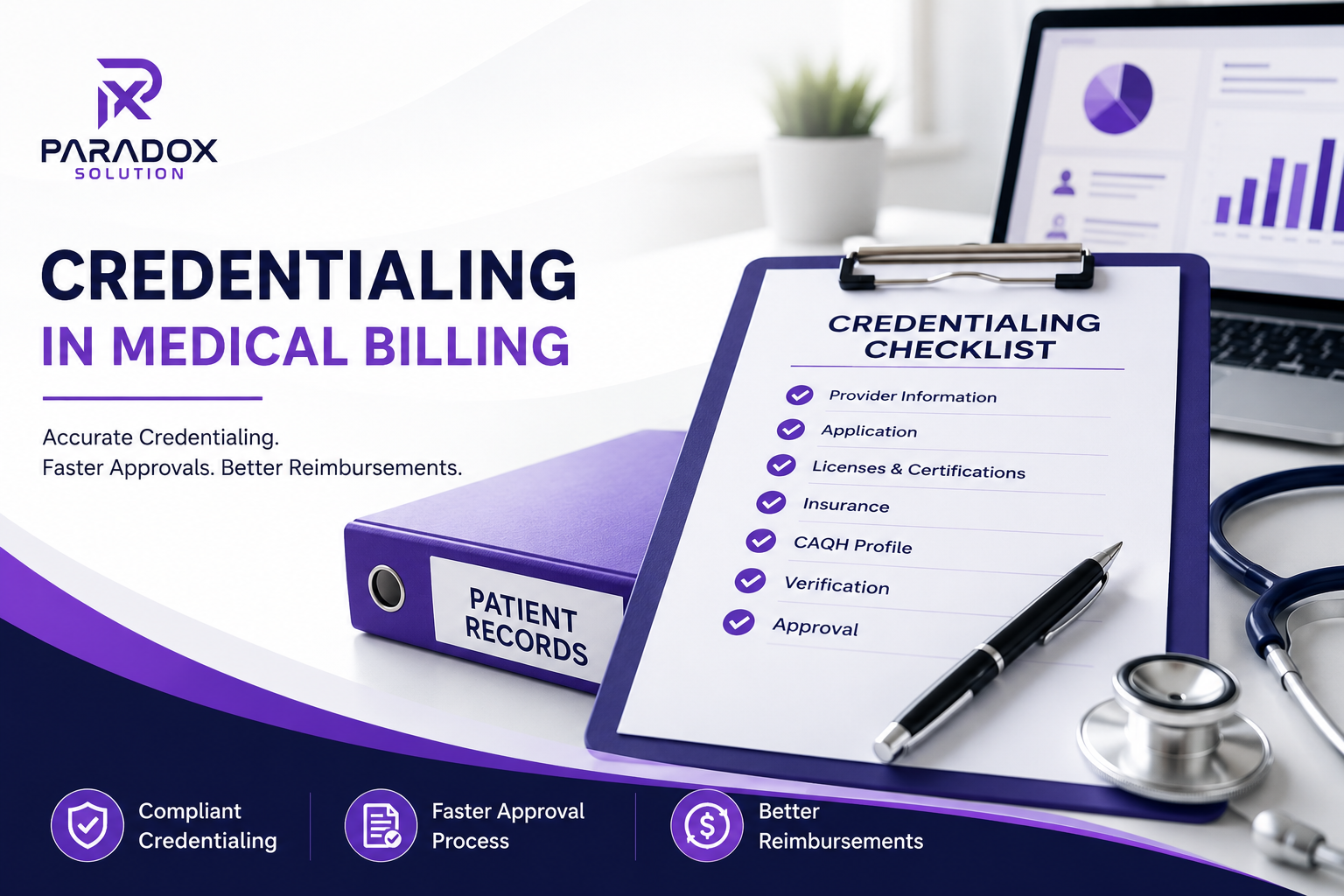
Credentialing in Medical Billing: A Practical Guide for Providers
Credentialing in medical billing can feel like a paperwork problem until it starts delaying payments. For a new practice, a newly hired provider, or a clinic expanding into new insurance networks, credentialing is one of those tasks that needs to be handled correctly from the beginning.
In simple terms, credentialing is how insurance companies and healthcare organizations verify that a provider is qualified to deliver care. They may review education, licenses, work history, certifications, malpractice coverage, and other professional details before approving participation.
The process can take time, and small mistakes often create unnecessary delays. A missing document, an expired license, or inconsistent information across applications may slow down enrollment.
For providers, understanding credentialing in medical billing is not about becoming a paperwork expert. It is about protecting revenue, avoiding preventable billing problems, and making sure patients can use their insurance benefits at your practice.
What Is Credentialing in Medical Billing?
If you are wondering what is credentialing in medical billing, think of it as the verification process that happens before a provider can participate with many insurance networks.
Medical billing credentialing and medical credentialing are closely connected to payer enrollment. Credentialing verifies the provider’s qualifications, while enrollment generally focuses on registering the provider with a payer so eligible claims can be processed according to the payer’s rules.
| Process | Main Purpose |
|---|---|
| Credentialing | Verifies professional qualifications |
| Payer enrollment | Registers the provider with an insurance payer |
| Contracting | Establishes participation terms and reimbursement arrangements |
| Recredentialing | Reviews credentials again at required intervals |
These steps may overlap, but they are not always the same process.
Why Credentialing Matters to Your Practice
Credentialing in healthcare affects more than administrative paperwork. It can influence when a provider can begin seeing patients under an insurance plan and how claims are handled.
Without proper approval, a practice may face:
- Delayed payer participation
- Claims processed as out of network
- Payment delays
- Patient confusion about coverage
- Extra administrative work
- Possible revenue loss
A common real world problem occurs when a practice hires a new provider and waits until the provider’s first day to begin credentialing. The provider may be ready to see patients, but payer approval may still be pending.
Starting early is usually the better approach.
What Is Healthcare Credentialing?
What is healthcare credentialing? It is the broader process used by payers, hospitals, healthcare organizations, and other entities to review a provider’s professional background.
The exact requirements vary, but organizations commonly review:
| Information | What May Be Checked |
| Identity | Personal and professional information |
| Education | Medical school and training |
| License | Current professional license status |
| Work history | Previous employment and unexplained gaps |
| Certifications | Relevant board certifications |
| Malpractice coverage | Current insurance information |
| Professional history | Sanctions or disciplinary matters when applicable |
The healthcare credentialing process may also involve primary source verification, where information is confirmed directly with the original issuing organization.
How the Healthcare Credentialing Process Works
1. Gather Provider Information
Collect all required information before submitting applications. This may include licenses, tax information, practice details, education history, work history, insurance documents, and identification numbers.
2. Review Everything for Consistency
One of the most practical lessons in medical credentialling is simple: small inconsistencies can create big delays.
Check names, addresses, dates, employment history, and practice information carefully.
3. Submit Applications
Applications are submitted according to the payer or organization’s requirements. Each payer may have a different process and timeline.
4. Respond to Follow Up Requests
A payer may request additional documents or clarification. Slow responses can extend the process, so credentialing requests should be monitored regularly.
5. Confirm the Effective Date
Approval alone is not always enough. Confirm the provider’s participation status and effective date before assuming claims will be treated as in network.
A Simple Credentialing Checklist
| Before Submission | Check |
| Professional license is current | ✓ |
| Practice information is accurate | ✓ |
| Work history is complete | ✓ |
| Malpractice coverage is current | ✓ |
| Required documents are available | ✓ |
| Application information is consistent | ✓ |
| Follow up responsibility is assigned | ✓ |
| Effective date is confirmed | ✓ |
Keeping a central credentialing file for each provider can save considerable time when applying to multiple payers.
Common Credentialing Mistakes
Waiting Too Long to Start
Credentialing can take weeks or longer depending on the payer and circumstances. Begin as early as practical when hiring a provider or opening a practice.
Submitting Inconsistent Information
Different addresses, employment dates, or practice details can trigger questions and delays.
Failing to Follow Up
Submitting an application is only the beginning. Regular follow up helps identify missing information before an application sits unresolved.
Assuming Every Payer Works the Same Way
Requirements vary. For example, someone researching UPMC provider credentialing should follow the current instructions and requirements provided by the relevant UPMC plan or organization rather than assuming another payer’s process applies.
In House Credentialing vs Outsourcing
| Option | Advantages | Possible Drawbacks |
| In house | Direct control and internal knowledge | Requires staff time and expertise |
| Outsourced | Can reduce administrative workload | Adds service costs and requires vendor oversight |
For a small practice with only a few providers, managing credentialing internally may be practical if someone is responsible for tracking deadlines and follow ups. A growing practice dealing with multiple providers and payers may benefit from experienced outside support.
The right choice depends on your workload, internal expertise, and how costly delays would be for the practice.
Practical Advice for Providers
Good credentialing is mostly about organization and follow through. Keep provider information updated, track every application, document communications, and confirm participation dates in writing whenever possible.
A simple tracker can include:
| Payer | Submission Date | Current Status | Follow Up Date | Effective Date |
| Payer A | Recorded | Pending | Scheduled | To confirm |
| Payer B | Recorded | Approved | Complete | Recorded |
This small habit can prevent applications from being forgotten and gives your billing team clearer information.
Final Thoughts
Credentialing in medical billing is an important part of protecting a practice’s revenue cycle. When the process is managed carefully, providers are better positioned to join appropriate networks, bill according to payer requirements, and reduce avoidable payment problems.
The best approach is straightforward: start early, submit accurate information, follow up consistently, and never assume participation is active until the payer confirms the provider’s status and effective date.